
Nano-Optics & Nanophotonics
Light manipulation and optical properties at nanoscale
Latest Coverage & Breakthroughs
All Research Articles →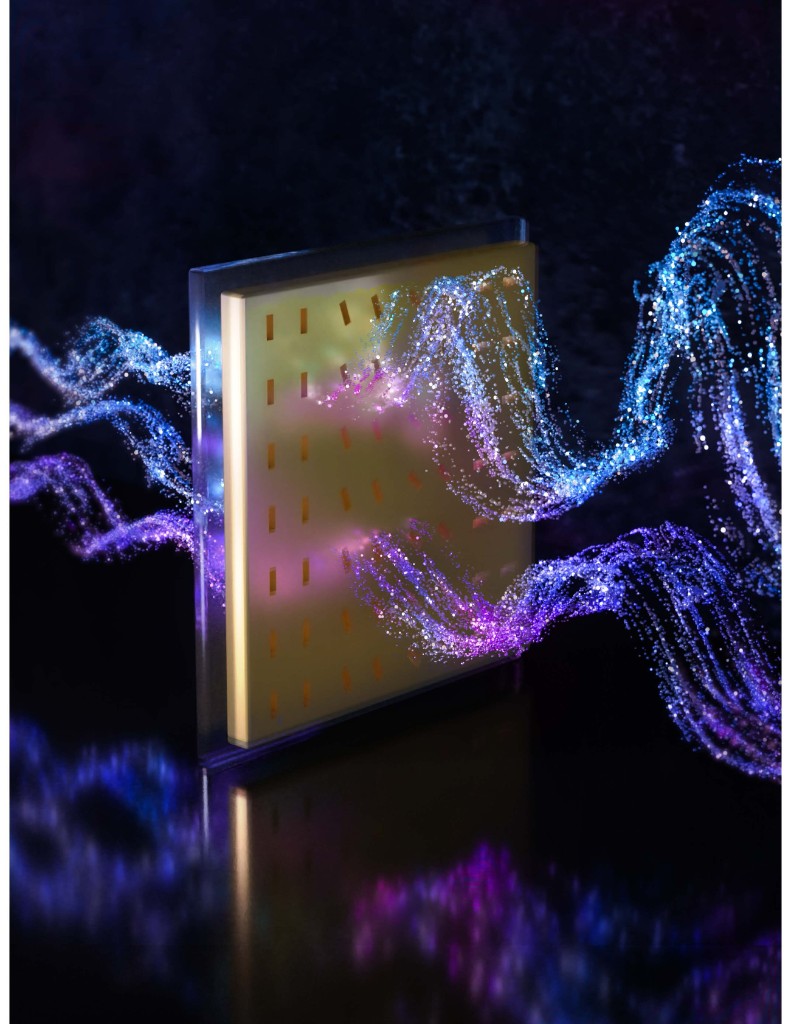
First Room-Temperature Quantum Statistical Metacrystal
Physicists led by Louisiana State University engineered a room-temperature quantum material called a quantum statistical plasmonic metacrystal. Using focused ion beams to carve microscopic slits (acting as meta-atoms) into a gold thin film on glass, the material distinguishes subtle quantum statistical differences in incoming light waves and routes distinct quantum states along separate pathways.

Texas A & M Researchers Developing Fish-Inspired Nanorobots to Recover Lithium from Seawater
Texas A and M researchers are developing fish-inspired swimming nanorobots to recover lithium from seawater, aiming to make critical-mineral extraction more efficient and environmentally sustainable.

IBM Reveals World’s First Sub-1 Nanometer Chip
IBM scientists report a 0.7-nanometer processor architecture using a vertically layered nanostack 3D transistor design intended to increase transistor density while improving performance and energy efficiency.

Grain Boundary-Induced Piezoelectricity in Ultrathin Diamond Membranes
Overturning a century-old material assumption that bulk diamond is non-piezoelectric, researchers fabricated flexible micro-thin polycrystalline diamond membranes. First-principles calculations revealed that mechanical bending induces structural charge asymmetries across internal crystal grain boundaries, producing a strong and repeatable piezoelectric voltage.

Alkali-Modified MOF Glasses
Researchers introduced lithium and sodium benzimidazolate modifiers into ZIF-62 to create MOF glasses with tunable thermal, structural, and porosity characteristics inspired by silicate glass chemistry.

ROS-Responsive Nanoplatform Targeting Glioblastoma Mitochondrial Crosstalk
A multifunctional nanoplatform, GS@DFP, is designed to cross the blood-brain barrier and target glioblastoma by combining ROS-responsive drug release, mitochondrial disruption, and suppression of astrocyte-to-tumor mitochondrial transfer.

ISO Releases ISO/TS 12901-2:2026 for Occupational Risk Control
ISO/TS 12901-2:2026 replaces ISO/TS 12901-2:2014, providing updated guidelines for applying a control banding approach to manage occupational exposure risks associated with engineered nano-objects and their aggregates/agglomerates (NOAA). Control banding aims to minimize exposure levels and safeguard worker health against potential adverse effects from nanoparticles. Designed specifically for inhalation risk mitigation, this pragmatic framework offers structured control strategies for research facilities and industrial manufacturers handling NOAA across their lifecycle, even when precise toxicity data and quantitative exposure metrics are limited or unavailable.

OECD Releases Test Guideline 322 for Nanomaterial Environmental Fate
The Organisation for Economic Co-operation and Development (OECD) officially released Test Guideline (TG) 322, establishing a standardized global protocol for measuring the dissolution rate and solubility of nanomaterials in water bodies across various pH levels. This guideline helps regulatory bodies accurately evaluate environmental persistence and aquatic toxicity.

EU REACH Restriction Roadmap targets Fibre-Form Nanomaterials
The European Commission has updated its REACH (Registration, Evaluation, Authorisation and Restriction of Chemicals) Restrictions Roadmap to tighten safety rules on materials made of dangerous fibers. Proposed by Germany, this initiative targets substances and products—including carbon nanotubes and inorganic nanofibers—that release long-lasting fiber dust matching World Health Organization (WHO) risk criteria. Because these high-aspect-ratio fibers can linger in the lungs like asbestos, the new rules aim to set strict workplace safety limits across all EU member states.